
Posted by Fish House Nation Podcast on 7th Oct 2026
How to Turn Your Fish House Into the Ultimate Mobile Office
Remote work has changed where many of us can get our jobs done. The home office is no longer the only option. Coffee shops, cabins, hotel rooms, and even vehicles have become temporary workplaces.
For ice anglers, there may be an even better option sitting in the driveway: the fish house.
If your job can be done remotely, why not occasionally trade the home office for a frozen lake? With reliable internet, enough power, a comfortable workspace, and a little planning, a modern wheelhouse can become a surprisingly capable mobile office.
On a recent episode of the Fish House Nation Podcast presented by Catch Cover, hosts Chris Larsen and Al Escobedo discussed what it takes to successfully work remotely from the ice. From Starlink and portable power stations to rattle reels and a warm rug under your desk, a few simple preparations can turn an ordinary workday into something considerably more enjoyable.
Why Work From Your Fish House?
For many people, one of the selling points of buying a wheelhouse is its versatility. It's a fish house during the winter, but it can also serve as a camper, hunting base camp, or extra sleeping space throughout the year.
It can also be an office.
As more employers embrace remote and hybrid work schedules, some anglers have an opportunity previous generations never had. Instead of spending a remote workday sitting in a spare bedroom, you could tow the fish house to your favorite lake, drop it down, put a couple of lines in the water, and open the laptop.
As Chris explained during the podcast:
“Sometimes it's really nice just to have a different setting when you're working.”
A fish house certainly qualifies.
There are also natural opportunities to take breaks. Instead of walking from your desk to the kitchen, you can step outside, stretch your legs, walk around the lake, check the conditions, and get some fresh air before returning to work.
The key is making sure your fish house actually functions as a workspace.
Reliable Internet Is Priority Number One
If you can't get online, most remote jobs aren't going to work very well from the lake.
Using your phone as a mobile hotspot may be sufficient in many locations, but ice anglers can encounter an unusual problem. A lake might have excellent cellular coverage during the summer and struggle during peak ice fishing season.
Popular destinations can suddenly have thousands of anglers concentrated in one relatively small area. That puts additional demand on the local cellular network.
Chris specifically mentioned lakes such as Mille Lacs, where thousands of people can be on the ice at once. Your phone may show a signal, but your actual internet performance can suffer.
One potential solution is satellite internet such as Starlink.
Chris has used Starlink while trolling on Lake Michigan and while traveling. He also used it during an ice fishing trip on Gull Lake and described it as an “absolute game changer” for people who need reliable internet in places where cellular service isn't dependable.
A cellular signal booster can be another option. It won't solve every connectivity problem, particularly when a network is overloaded, but improving a marginal cellular signal may be enough for basic email, web browsing, and other work.
Before committing to a full workday on the lake, test your connection.
Develop a Power Strategy
Internet doesn't do much good when your laptop battery reaches zero.
Working from your fish house adds additional electrical demands beyond what you might normally have during a day of fishing. You're potentially charging a laptop, phone, tablet, internet equipment, monitors, cameras, and other electronics.
Meanwhile, the fish house itself still needs power.
Chris and Al recommend thinking about your entire electrical setup before heading onto the ice. Depending on the length of your stay, that could include a generator, quality house batteries, an inverter, solar panels, and portable lithium power stations.
Portable power stations are especially useful for smaller electronics. Instead of running cords everywhere or relying on your fish house electrical system for every device, a portable battery can handle laptops, phones, cameras, and other relatively small loads.
It also provides redundancy.
If something happens with your generator or house batteries, having another source of electricity could be the difference between finishing your workday and packing everything up early.
Make the Fish House Comfortable for Working
A chair that's comfortable while jigging for walleyes isn't necessarily comfortable after three hours of working on a laptop.
Ergonomics matter.
Figure out where you'll place your computer and whether the height is appropriate. A small folding table or lap desk might be a worthwhile addition. If you prefer standing while working, consider a small platform or portable standing-desk solution that raises your computer to a comfortable height.
Another easy upgrade is using the television already mounted in many modern fish houses as a second monitor.
Pack an HDMI cable or whatever adapter your computer requires. Having a full-size second screen can dramatically improve the experience for anyone accustomed to multiple monitors at home.
And don't overlook your feet.
Chris suggested putting a comfortable rug underneath your workspace. Even in a heated fish house, floors can remain cold. When you're actively fishing, you're constantly moving around and may barely notice it. Sit in one place working for several hours, however, and that cold can become much more noticeable.
Small comfort upgrades could determine whether working from your fish house becomes something you regularly enjoy or an experiment you try once.
Plan Your Food Ahead of Time
Working from home makes eating easy. You can walk to the refrigerator, grab something from the pantry, or drive a few minutes to pick up lunch.
That isn't always possible on a frozen lake.
If you're several miles onto the ice or fishing a remote destination such as Upper Red Lake, running out for lunch might become a significant interruption.
Prepare accordingly.
Bring simple meals that don't require much attention. A crock pot can be ideal because dinner can cook while you're working. Sandwiches, soups, leftovers, and other easy meals also keep your workday efficient.
Remember that cooking appliances add to your electrical demands, so include them when developing your power plan.
Don't Forget Why You're on the Lake
The point isn't simply to recreate your home office inside an aluminum box.
You're on a frozen lake. Go fishing.
The trick is choosing fishing techniques that don't require constant attention.
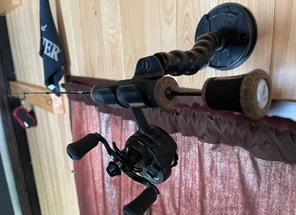
Rattle reels are almost perfect for this situation. Rig them with live bait and let the fish come to you while you're working. A dead stick in a rod holder provides another low-maintenance option.
Keep your minnows healthy with a quality bait container and aerator, get your lines down, and then get to work.
You can also structure your workday around prime fishing periods.
If sunset typically produces the best bite, plan to close the laptop for an hour or two. Take advantage of slower fishing periods to answer emails, complete projects, or join meetings, and then switch your attention back to fishing when conditions are best.
You're still supposed to be having some fun.
Do a Practice Run in Your Driveway
One of the best suggestions from the episode doesn't require any ice.
Before winter arrives, park your fish house in the driveway and spend some time inside with your laptop.
Where will you sit?
Where will your computer go?
Do you have enough outlets?
Is the television easy to connect to your laptop?
Where will you place your Starlink equipment or hotspot?
Are you comfortable sitting in that location for several hours?
What did you forget?
A driveway test lets you answer those questions while you're still 30 feet from your garage instead of several miles onto a frozen lake.
It also allows you to create a repeatable setup. Once you know where everything belongs, arriving at the lake becomes much easier. Drop the house, organize the workspace, get the fishing lines down, and start your day.
Your Next Office Could Be on the Ice
Working remotely from a fish house isn't going to make sense for everyone. But if your job primarily requires a laptop, phone, and reliable internet connection, there isn't necessarily a reason you have to spend every remote workday at home.
Today's wheelhouses already provide heat, electricity, seating, televisions, kitchens, and comfortable living spaces. Add reliable internet and a thoughtfully designed workstation, and you've got nearly everything required for a productive office.
Except your coworkers probably aren't going to have a walleye swimming underneath their desks.
With some planning, reliable connectivity, adequate power, comfortable seating, easy meals, and a few strategically placed rattle reels, you really can get your work done while enjoying a day on the ice.
And that might be the ultimate definition of remote work.