
Posted by Fish House Nation Podcast on 18th Nov 2026
Turn Your Fish House into a Hunting Camp: How to Get The Most From Your Season
A fish house parked in the driveway during October can feel like a promise waiting on cold weather. The bunks are ready, the heater works, and there’s a place to make breakfast. All that’s missing is ice.
But if you hunt, there’s no reason to wait.
That same wheelhouse can become a deer camp, a home base for a Dakota pheasant trip, or a place to sleep between mornings in the duck blind. Instead of driving back to a hotel each evening, you can return to a camp stocked with your own gear and food.
On the Fish House Nation Podcast, Chris and Al discussed how to make that transition work. Their advice starts with thinking beyond a comfortable bed. A successful hunting camp needs dependable power, organized equipment, and a location that helps your hunt.
Put Camp Where It Helps You Hunt
One of the biggest advantages of taking your fish house hunting is spending less time driving. Staying near your hunting area makes early mornings easier and gives you somewhere to eat or rest during a midday break.
Still, the closest parking spot isn’t always the best campsite.
For deer and elk hunters, camp placement deserves the same attention as an approach to a stand. Think about prevailing winds, animal travel routes, and how you’ll enter and leave the hunting area. A convenient campsite loses its appeal if your scent blows toward the cover you plan to hunt.
Consider the activity around camp, too. Doors opening, conversations outside, cooking smells, and a running generator all add a human presence.
Before settling in, check camping rules and access requirements for your destination. Then choose a legal spot that balances comfort with a sensible route into the field.
Have a Power Plan Before You Leave
On a busy frozen lake, generator noise can blend into the background. At a quiet hunting camp, it may carry much farther than you expect.
Nearby campers might be sleeping in tents or trucks. Wildlife may be using the surrounding cover. Even on private property, a generator running through the night changes the atmosphere.
If campground hookups or power at a farm are available, planning becomes easier. For remote camps, think through what your batteries can support and whether your solar setup can help meet demand. Lights and phone charging require a different plan than appliances.
There’s also a small detail that can create a frustrating departure: leaving the trailer’s electrical connection plugged into the truck. Depending on the setup, the house can draw down the starting battery. Know how your system works before leaving it connected all weekend.
Make Room by Leaving Fishing Gear Behind
It’s easy to load hunting equipment around everything already in the house. A few totes go under the table, boots land by the door, and camouflage fills the remaining cabinet space.
By the second morning, finding anything becomes a project.
Chris described a seasonal changeover system he learned from Joel Nelson: remove the ice fishing equipment, store it in totes, and replace it with the gear needed for hunting.
As Chris put it, “nothing is more frustrating when you're trying to find your broadheads to go through a cupboard that's full of bobbers.”
Give bedding, rainwear, extra layers, and hunting accessories designated places. Keep sharp equipment secured and firearms properly stored. When ice season arrives, reverse the process.
An hour spent switching equipment at home can save repeated searches when you’d rather be heading out the door.
Give Hunting Clothes Their Own Space
A warm fish house is a welcome place to cook supper. It’s also a small space where food odors and damp clothing can quickly mix.
Al’s solution is to bring a hub shelter and use it as a separate area for hunting clothing and changing. That frees up room inside the wheelhouse and helps keep hunting layers away from cooking smells.
The arrangement also provides somewhere to hang damp gear. If you use a heater in a shelter, follow its instructions for ventilation, clearance, and safe operation.
An awning can provide another sheltered spot for airing clothing when conditions allow. Wherever you store gear, consider weather exposure and security. Equipment left outside should suit both the location and your comfort with leaving it unattended.
Plan for Wet Boots and Everyday Needs
The first morning of a trip usually begins with dry clothes and neatly packed equipment. A few hours of rain, wet grass, or hard walking can change that.
Bring a boot dryer if your power setup supports it, and decide where jackets and gloves will hang. Spare socks and dry layers are much easier to appreciate when everything else is damp.
Water deserves equal attention. Pack enough for drinking, cooking, and washing. If your house doesn’t have a usable shower, bring supplies for cleaning up after a long day.
Al summed up the value of preparing ahead: “Planning is number one.”
A driveway rehearsal helps. Load the essentials, walk through your morning routine, and picture returning with muddy boots and wet clothing. You’ll quickly notice what needs a better place.
Check the House Before the Highway
A fall hunting trip may involve more highway miles than your usual winter fishing weekend. Before leaving, inspect tires, wheel bearings, lights, and the hitch connection. Check the spare and bring the equipment needed to change a tire.
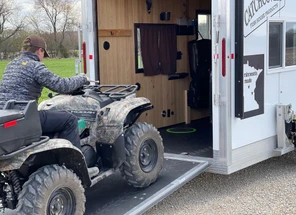
If you’re carrying an ATV or heavy gear inside, pay attention to load placement and secure everything properly. Follow the ratings and guidance for your truck and trailer, and choose a speed appropriate for the load and conditions.
Fall is also a convenient time to consider Catch Cover Pro Hole Covers. Discussed in the episode, their lower-profile handles help reduce tripping obstacles, while a tighter seal helps keep dust out on dirt-road trips.
Finally, think about securing the house while you’re hunting. Check locks and storage arrangements, especially when camp will sit unattended.
Your wheelhouse already offers much of what makes a good hunting camp comfortable. With a thoughtful changeover, it can earn its place in another season and give you a few more memorable trips before the lakes freeze.