
Posted by Great Lakes Fishing Podcast on 29th Jun 2026
10 Proven Ways to Catch More Fish When the Ice Fishing Bite Slows
Few things are more frustrating than spending time scouting, towing your wheelhouse onto the ice, getting everything set up, and then staring at motionless rod tips for hours.
Every ice angler has experienced it. You picked the spot with confidence. The electronics looked promising. You fired up the heater, settled into your favorite chair, maybe even started dinner in the crockpot...and nothing happens.
So what's the next move?
On a recent episode of the Fish House Nation Podcast, hosts Chris Larsen and Al Escobedo discussed exactly what anglers should do when the bite slows down. The good news is that a slow bite doesn't always mean you're in the wrong location. Often, a few simple adjustments can completely change the outcome of your trip.
Here are some of their favorite strategies.
Don't Move Right Away
The first instinct many anglers have is to hook up the wheelhouse and relocate.
Sometimes that's the right decision—but often it isn't.
If you selected your location based on solid scouting and previous success, it's usually worth spending some time confirming that fish simply aren't active before making the major commitment of moving your house.
Instead, start by exploring the immediate area.
Drop a few tip-ups around your wheelhouse. Drill several additional holes 20 to 40 feet away and check them with your electronics. If water clarity allows, lower an underwater camera to inspect the bottom composition and identify what's actually beneath your house.
As Chris Larsen explains:
"If I felt confident in this spot when I set up...I'd probably just put some tip-ups out too and just kind of explore my general region."
Sometimes the fish are only a short distance away. A slight adjustment to a weed edge, rock transition, or structure break can make all the difference without requiring you to relocate your entire setup.
Experiment With Your Presentation
If you're marking fish but they aren't biting, the problem probably isn't your location; it's your presentation.
This is where anglers need to start working through different combinations.
Try changing:
- Jig size
- Lure color
- Live bait versus plastics
- Minnows versus waxworms
- Rattle baits versus subtle presentations
Al Escobedo recommends starting with smaller presentations when fish become finicky.
"My first move is always going smaller. I start with something bigger, then first step will be smaller."
Sometimes a downsized jig is all it takes.
Other times, the opposite approach works. Switching to a noisy rattle bait can help fish locate your lure from much farther away, especially in stained water or during aggressive feeding windows.
If neither extreme works, simplify everything. A plain hook and a lively minnow often out-produces flashy tackle when fish are pressured.
Fish Higher in the Water Column
Many ice anglers automatically position their bait just inches above bottom, particularly when targeting walleyes.
While that can certainly work, it's not always the most visible presentation.
Fish can often spot elevated baits from much farther away.
Larsen compares it to spotting a hot air balloon.
If it's flying hundreds of feet overhead, everyone notices it. If it's only a few feet above the ground, it's much harder to see from a distance.
The same principle applies underwater.
Instead of keeping your lure six inches off bottom, experiment with raising it several feet. Fish cruising nearby are much more likely to notice it.
This becomes especially important around weeds, where vegetation can hide your presentation.
Use Your Electronics to Gather Information
Electronics have completely changed modern ice fishing.
But they're most valuable when they're helping you make decisions, not simply confirming there's something beneath your hole.
For example, sonar may show fish under your wheelhouse, but an underwater camera might reveal they're actually tiny perch instead of the walleyes you're hoping to catch.
Knowing exactly what's below allows you to adjust your expectations or change locations before wasting valuable fishing time.
If you're not seeing fish at all, use your electronics to search nearby structure before deciding to move your wheelhouse.
Keep Some Baits Working While You Relax
One of the biggest advantages of fishing from a permanent fish house is comfort.
You're cooking meals.
Watching television.
Playing cards with friends.
While you're enjoying those creature comforts, don't let your lines stop working.
Deadsticks and rattle reels continue fishing even when you're taking a break.
Larsen especially likes suspending a bait just below the ice on a rattle reel.
Predator fish often cruise high in the water column looking for injured perch or panfish, particularly on lakes where anglers frequently release smaller fish.
That suspended presentation can produce surprise bites while you're focused on something else inside the house.
Reduce Light Inside the Wheelhouse
Modern wheelhouses are incredibly comfortable.
Bright LED lighting.
Large televisions.
All the conveniences of home.
Unfortunately, those conveniences can sometimes hurt your fishing.
In clear water, excessive light shining through the holes may spook fish, particularly after sunset.
As evening approaches, try turning off unnecessary interior lights.
The difference can be surprising.
This simple adjustment costs nothing and only takes a few seconds to test.
Think About Noise
Noise travels exceptionally well through ice.
Generators, footsteps, and vibrations can all affect nearby fish.
One simple trick discussed on the podcast is placing your generator on an anti-fatigue mat in the bed of your truck rather than directly on the ice.
This helps reduce vibration entering the ice sheet while also making the generator quieter overall.
If you're fishing in a crowded area, you might even experiment with temporarily shutting off your own generator to see whether the surrounding noise pushes fish back toward your wheelhouse.
Could Your Live Sonar Be Affecting Fish?
Forward-facing sonar has become one of the hottest technologies in fishing.
But could it sometimes work against you?
The hosts believe it's worth considering.
After experiencing an unusually difficult bite, they noticed something interesting.
"We turned live sonar off and we went to bed every night—and that's when we got all the fish."
Was it simply because it was nighttime?
Maybe.
But they also observed fish visibly reacting to live sonar on heavily pressured lakes.
There's still plenty to learn about how fish respond to sonar, but if you're struggling to get bites, turning your live sonar off for 10 or 15 minutes is an easy experiment that might surprise you.
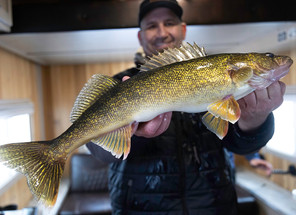
Rattle Reel bites are a ton of fun!
Preparation Still Wins
While all these adjustments can save a slow day, the best strategy happens before your wheelhouse ever touches the ice.
Do your homework.
Study maps.
Review past fishing reports.
Spend extra time checking your location before drilling multiple holes and committing to a setup.
A few extra minutes of scouting can eliminate hours of frustration later.
As Al Escobedo puts it:
"Put in the homework, do the scouting, and hopefully catch fish."
Small Adjustments Can Save an Entire Trip
Slow bites happen to every ice angler.
The key is resisting the temptation to panic.
Instead of immediately moving your wheelhouse, work through a checklist of adjustments:
- Explore the surrounding area.
- Change lure size, color, or bait.
- Raise your presentation higher in the water column.
- Add or remove noise from your presentation.
- Reduce light inside the house.
- Pay attention to generator vibration.
- Experiment with turning off live sonar.
Sometimes one small adjustment is all it takes to transform a quiet weekend into one you'll remember for years.
The next time your rod tips stay still, don't assume the fish have disappeared. Make a few smart changes, stay patient, and let the fish tell you what they want.