
Posted by Fish House Nation Podcast on 12th Oct 2026
Night Fishing From a Permanent Fish House: Tips for Walleyes & More After Dark
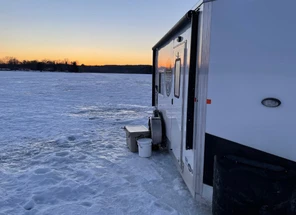
One of the biggest advantages of owning a permanent fish house is the ability to stay on the ice overnight. Instead of packing up when the sun goes down, or trying to get back onto the lake before sunrise, you can have lines in the water throughout the night and be ready when fish become active.
In Episode 216 of the Fish House Nation Podcast, hosts Chris Larsen and Al Escobedo discuss how anglers can make the most of overnight fishing from a wheelhouse or permanent fish house.
From finding the right location and choosing presentations to setting rattle reels and staying safe, a little preparation can make a night on the ice both more productive and more enjoyable.
Why Fish at Night?
For many ice anglers, walleyes are the primary target after dark. While daytime fishing can certainly produce walleyes, low-light periods around sunset and sunrise can create some of the best opportunities of the day.
A permanent fish house gives anglers a major advantage during those windows because there is no commute to the fishing spot. Your holes are drilled, your gear is ready, and your lines can already be fishing.
As Larsen explains in the episode:
“That's what makes night fishing so awesome is you get to be relaxed, take your time, but you're always ready to go in those key bite periods.”
Those key periods can include sunset, the middle of the night, and especially the hours leading up to sunrise.
Walleyes aren't the only fish that can show up after dark, either. Larsen and Escobedo have caught panfish at night, and burbot are another species anglers may encounter while fishing overnight.
Where Should You Put Your Fish House for Night Fishing?
Location remains one of the biggest factors in ice fishing success.
The best starting point is often information you've already gathered during the day. If walleyes are relating to weeds, rocks, or another type of structure during daylight hours, look for similar structure nearby that gives those fish an opportunity to move shallower and feed after dark.
For example, if you're marking fish along a deeper weed edge during the afternoon, a shallower portion of that same weed line may become more productive after sunset.
The same concept applies to rock piles and other structure.
If you're fishing a lake you've never been on before, start with traditional high-percentage walleye areas and adjust based on what you see on your electronics.
The important thing is remembering that nighttime doesn't necessarily require abandoning the pattern you discovered during daylight. Sometimes it's simply a matter of adjusting your location as fish transition into feeding areas.
Experiment With Glow Jigs
Glow jigs have become a staple for nighttime ice fishing because they give fish another way to locate a presentation in low-light conditions.
However, brighter isn't automatically better.
Water clarity, fishing pressure, depth, and the mood of the fish can all affect how much glow you want from a lure.
Some lakes may require anglers to regularly recharge a glow jig. On another body of water, fish may respond better to a much more subtle presentation.
That's why experimentation matters.
Try different glow colors and brightness levels. If fish are coming in but refusing the bait, don't be afraid to reduce the amount of glow or switch presentations entirely.
The goal isn't simply to make your lure as bright as possible. It's to make your bait easier for fish to locate without making it unnatural.
Keep Your Fish House Dark
One overlooked factor when fishing at night is the amount of light coming from inside the fish house.
This can be particularly important when fishing shallow, clear water.
If you're sitting over six or ten feet of clear water with every light inside the wheelhouse turned on, a significant amount of that light may penetrate through the holes and into the water.
Later in the winter, when fish have experienced weeks of fishing pressure, that additional light may make them more cautious.
Larsen recommends reducing the amount of light inside the house when fishing shallow water. Turn off unnecessary overhead lights and use something more subtle, such as the television or a small light, when possible.
In deeper or stained water, this may not matter nearly as much. But in shallow, clear water, reducing light is another small adjustment that may help put the odds in your favor.
Rattle Reels Keep You Fishing While You Sleep
Eventually, even the most dedicated ice angler needs some sleep.
That's where rattle reels become one of the greatest advantages of a permanent fish house.
A rattle reel allows anglers to keep a live bait presentation in the water while relaxing, watching television, eating dinner, or sleeping.
When a fish takes the bait and begins pulling line, the reel provides an audible alert.
For Larsen, that's exactly why a rattle reel is such an important part of overnight fishing.
“When that Catch Cover Rattlesnake Reel starts pop, pop, pop, pop, it's going to wake me up.”
That means you can stay ready for a walleye that cruises through at 1 a.m., 4 a.m., or just before sunrise without sitting over a hole all night.
Put Fresh Bait Down Before Bed
Before climbing into your bunk for the night, take a few minutes to check every line.
Larsen likes replacing his minnows before going to sleep so fresh, lively bait is available when the early-morning feeding window arrives.
If you're going to bed around midnight, the minnow you put down earlier in the evening may not be nearly as active several hours later.
Replacing bait takes only a few minutes and gives you confidence that every rattle reel is fishing effectively while you sleep.
It's a simple detail, but overnight fishing often comes down to being prepared when a short feeding window occurs.
Don't Forget About Overnight Safety
Comfort is one of the great things about modern fish houses, but spending the night on a frozen lake also requires additional safety considerations.
Carbon monoxide is among the most serious.
Larsen recommends having more than one carbon monoxide detector inside the fish house. He also warns anglers to pay attention to where furnace exhaust is located when opening windows. Under certain wind conditions—or when there is almost no wind—exhaust can potentially find its way back inside.
Generators should also be positioned well away from the fish house.
Anglers should have a flashlight or headlamp readily available and create a safe, level place outside the door. Snow banking around a wheelhouse can create slippery slopes that become especially difficult to see at night.
When fishing larger bodies of water, communication is also critical.
Talk with resort operators about road conditions, pressure ridges, cracks, bridges, weather, and changing ice conditions. Conditions on large lakes can change quickly, and anglers need to know both how they're getting onto the lake and how they're getting back off.
Enjoy the Best Part of Wheelhouse Fishing
Night fishing doesn't have to mean staring down a hole until sunrise.
That's part of what makes fishing from a permanent fish house so much fun.
Make a good meal. Watch a movie. Play cards. Get some sleep. Spend time with family and friends.
Meanwhile, your rattle reels can continue fishing.
When one finally starts making noise in the middle of the night, everybody in the house suddenly remembers why they came.
With the right location, fresh bait, a few glow presentations, properly set rattle reels, and a good safety plan, an overnight trip can provide some of the most memorable moments of the entire ice fishing season.
And if that rattle reel starts screaming at 4 a.m., there's only one question left to answer:
Who's getting out of bed?